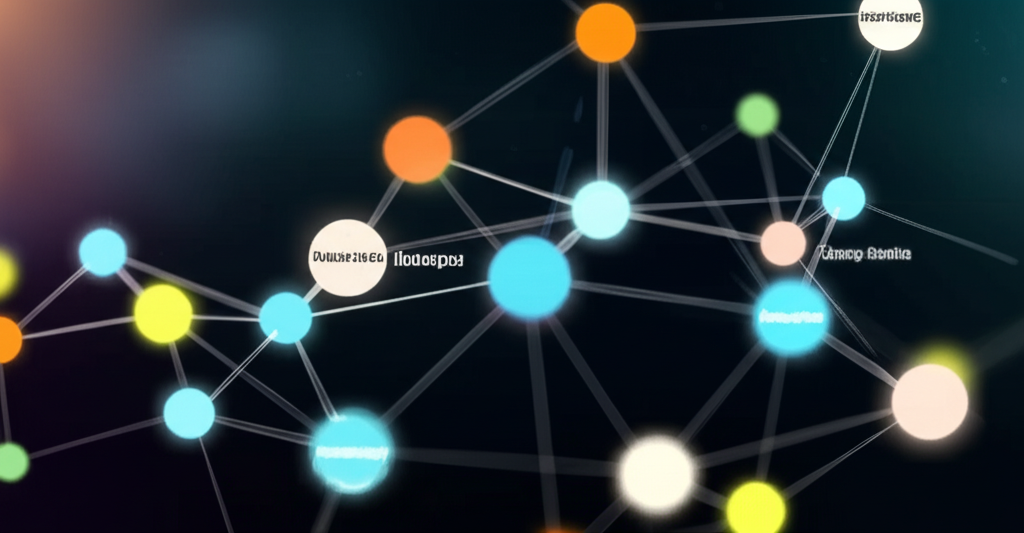
Microsoft's GraphRAG represents an evolution in retrieval-augmented generation, using knowledge graphs to enable more sophisticated reasoning patterns. This tutorial will guide you through understanding and implementing GraphRAG for your applications.
What is GraphRAG?
GraphRAG builds on traditional RAG by organizing information into structured knowledge graphs rather than simple vector embeddings. This enables multi-hop reasoning, relationship tracking, and hierarchical queries that traditional RAG systems struggle with.
Key Advantages
- Better reasoning: Explicit relationships enable complex multi-step queries
- Reduced hallucination: Structured knowledge reduces false connections
- Hierarchical search: Query at different levels of abstraction
- Efficient retrieval: Graph traversal finds precisely relevant information
Getting Started
Install the Microsoft GraphRAG library:
pip install graphragBuilding Your First Knowledge Graph
Start by indexing your documents:
from graphrag.index import index_docs

documents = load_documents("path/to/documents")

config = {
    "llm": {
        "api_key": "your_openai_key",
        "model": "gpt-4"
    }
}

graph = index_docs(
    documents=documents,
    config=config
)
Querying the Graph
Query your knowledge graph with context-aware search:
from graphrag.query import query_with_local_context

result = query_with_local_context(
    graph=graph,
    query="What are the key relationships?",
    query_type="global"
)

print(result.response)
When to Use GraphRAG
GraphRAG excels when:
- Documents contain complex, interconnected information
- Multi-hop reasoning is required
- Reducing hallucinations is critical
- You need to maintain semantic relationships explicitly
Best Practices
- Start with domain expert review of extracted entities
- Implement versioning for your knowledge graph
- Monitor extraction quality continuously
- Consider hybrid approaches combining GraphRAG with traditional RAG
- Customize entity types for your specific domain
Next Steps
Explore the official Microsoft GraphRAG documentation for advanced features like community detection, hierarchical queries, and custom entity extraction patterns.